Tuesday, 23 May 2017

"Walkshop": Developing a Relationship with the Natural World & AGM


“With society seemingly moving farther away from nature, there is a stronger need for schools to focus on creating more opportunities for children to experience it. Children and nature belong together. They need no formal introduction, just time for the relationship to grow; nature introduces itself.” ~ Strengthening Relationships with the Natural World in a Reggio Emilia Inspired Preschool in Atlanta, Georgia by Susan Edwards and Gabriela Garcia, Innovations in Early Childhood, Winter 2013
We are looking forward to closing out our 2016-17 season exploring with Mavis Lewis-Webber who believes children and the adults in their lives thrive in the great outdoors. This hands on interactive outdoor ‘walkshop’ will explore the natural space at FortWhyte Alive. Mavis will share ideas on how to safely take children into natural spaces so they can develop a relationship with the natural world. 
Mavis is a trained Forest School educator who mentors others in their learning journey. Mavis loves living in the Interlake and wandering the trails on her 80 acres.


DATE AND TIME

Tue, 6 June 2017

Siobhan Richardson Field Station
Fort Whyte Alive 
1961 McCreary Rd 
Winnipeg, MB R3P 2K9

Is there a cost for this event?
A donation to the silver collection at the registration table is gratefully appreciated.

What are my transportation/parking options for getting to and from the event?
We suggest carpooling to the event. Parking in the main lot and planning for a short 20 min. walk into the Siobhan Richardson Research Station is recommended. 
What can I bring into the event?
  • BYOW - Bring your own water
  • Dress for the weather on that day. Wear long pants and close-toed shoes as we will be walking on uneven ground in the bush. You may encounter forest creatures (mosquito’s and possibly wood ticks) so come prepared. 
How can I contact the organizer with any questions?
Snarozniak@RRC.CA
Do I have to bring my printed ticket to the event?
You are not required to print your ticket. Please check in at the registration desk and pick up your name tag upon arrival. 
Can I update my registration information?
This is a wait-listed event. If you are unable to attend those on the wait-list will be happy to replace you. Should you need to make a change to your registration please contact the organizer.

Friday, 19 May 2017

A Wonderful Evening of Clay Play

Recently we hosted our first hands-on clay workshop! We were overwhelmed at the response as spots filled quickly and we had people on the waiting list only two days after announcing the workshop. We will definitely host more of these type of experiences in the future.

On that note, please let us know if you have any other ideas for workshops you'd like to attend.

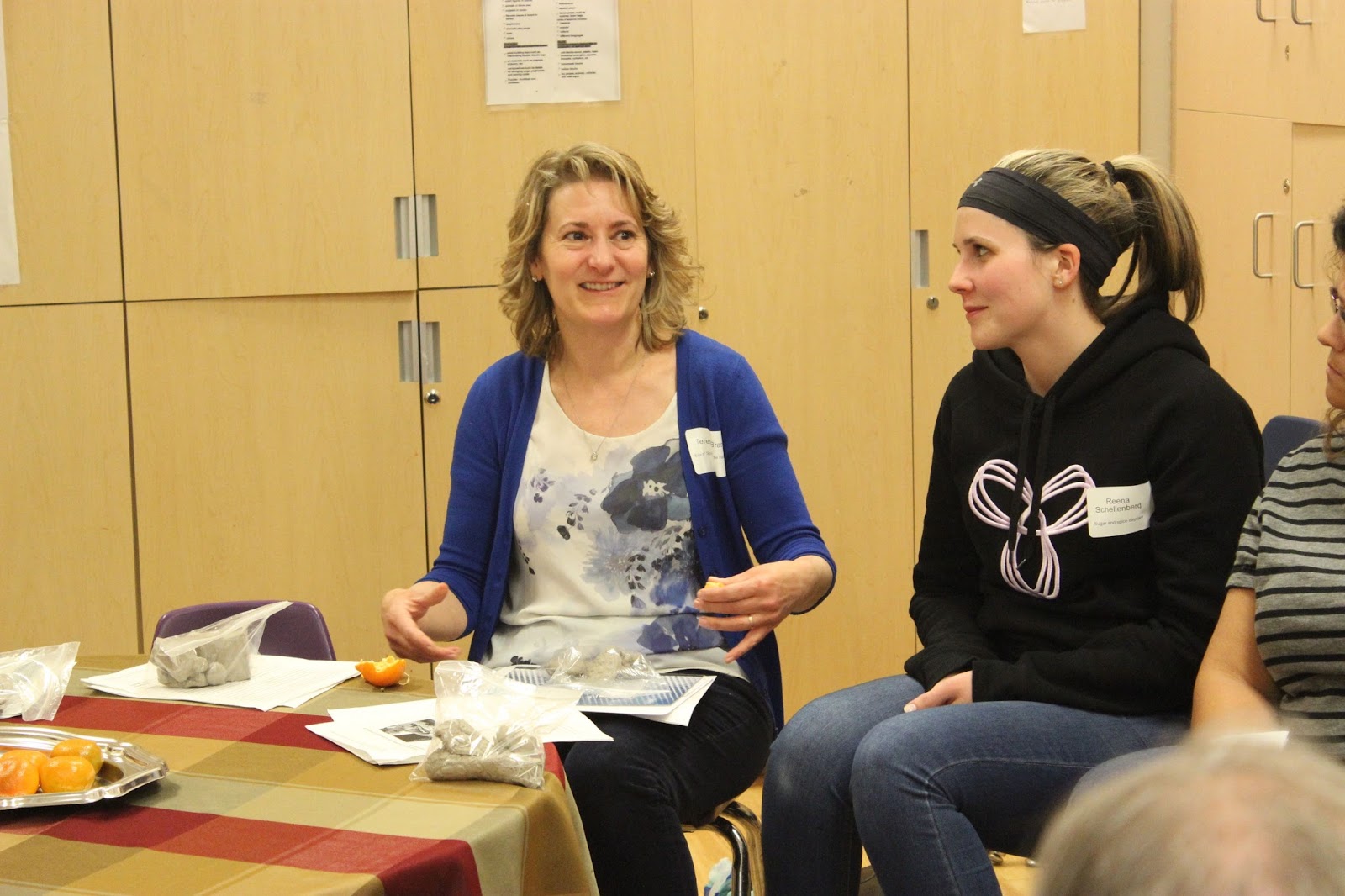
The workshop was split into two components. Half of the evening was spent reading, reflecting and discussing the articles, "Stepping into Clay" and "Using clay to scaffold and understand children's expressions." There was rich conversation and dialogue about using clay with young children. It was so inspiring to learn together in a room full of such diverse and experienced educators.


The second half of the evening began with an introduction to clay by Kim Crass and Ashley Taylor from Riverbend Community School. They led us through an introduction to clay with clay considered as a gift from Mother Earth. Participants were encouraged to experience the clay with ALL of their senses.

Then we all got to put our learning into action and sink our fingers into the clay. I really enjoyed listening to everyone's thoughtful dialogue as they worked with the clay.


Ideas such as exploring the properties of clay, blocking the clay, pinch-pot work, rolling/slab work and coil pot work were explored and many different pieces were created.  A variety of tools (many of them found objects) were used to imprint, shape and create. Participants learned a bit about respecting clay as a medium and how to introduce clay into curriculum with preschool and school age children. 

Use of clay to develop a new or different perspective when children study a scheme or idea is an exciting opportunity. Children can benefit from the fine motor skill challenge as well as develop a creative perspective while exploring this modality. 
Clay is one of the Hundred Languages of children and it is one that helps children to bring their ideas from photos, sketches, or paintings to life!

Sunday, 16 April 2017

Working with Clay: A Reggio-Insired Perspective

We are so excited to announce our second networking event of the 2016-17 season.

Come and explore the beauty of clay play as one of the modalities of The Hundred Languages available to children as they express their learning potential.
 
Please follow the link below to Eventbrite for location information and to register.


Tuesday, 7 February 2017

Reggio-Inspired Spotlight: Simone Penner

Our February blog spotlight educator is Simone Penner. I actually met Simone on a Canadian study tour in Reggio-Emilia a number of years ago. I am so excited that she has been willing to share her story here. 

If you are interested in being featured on our blog, or know someone who should, please contact us at manitobarice@gmail.com. Please note, we are looking for educators at various points in their journey. We all have something to share.


About Myself...
I have been in the child care field since 1990 and during that time have seen many positive changes.  I was instrumental in implementing the emergent curriculum to a program who was implementing a theme based curriculum.  I then worked with senior administers at Balmoral Hall School to introduce one of a kind child care experience for 2-3-year-old girls. I have been the Director of BH Beginnings Child Care since it's conception in 2009.  The child care program is located in Balmoral Hall School, an independent day and boarding school for girls aged 2 years to grade 12.  The program is influenced by the Reggio Emilia pedagogy and I have been so fortunate to have attended a Canadian Study Group in Reggio Emilia, Italy as well as several NAREA conferences. 

Contact Information:
Simone Penner
Director BH Beginnings Child Care
Balmoral Hall School
630 Westminster Ave.
Winnipeg MB R3C 3S1
204-784-1600 ext 642
Instagram   BHbeginnings
Twitter @BHbeginnings


MB RICE: How and when did you become interested in RE?
Interestingly enough, prior to starting BH Beginnings Child Care in 2009, I was fully immersed in emergent curriculum.  I gained a passion for that while learning it with a student I was mentoring years prior.  She had an emergent curriculum project to complete and at the time we were a theme based program. 
When I interviewed for my current position as Director, I did some background research on Reggio Emilia. While I found it very interesting, with opening a new center I didn't really have a full appreciation of it until a few years later. I found I was then better prepared to really delve into the Reggio Emilia pedagogy and I began to study it in detail. In May of 2014, I had the extraordinary opportunity to attend a Canadian Study Group in Reggio Emilia, Italy. As you can imagine, being in the place where this philosophy was founded and seeing first hand Reggio Emilia centers and schools, I found a whole new appreciation their methods.  


MBRICE: What are your favourite aspects of the philosophy?
I really appreciate the belief that children are capable.  It sounds so simple but when I looked at my program and broke it down, I realized that we could be allowing the children much more freedom to explore. Although we had always encouraged independence, we had to change our mindset to allow the children even more opportunities to be independent. A very simple example of this is the time a teacher needed to put left over oranges as well as a half jug of milk in the fridge in the other room.  As he stood trying to gain the attention of an educator, I asked if he needed the items to go in the fridge. I suggested he give the oranges and milk to two 3 year old children who were close by and ask them to put them in the fridge. Of course, they were easily able to accomplish this task and they were so proud to have done it. This illustrates what I mean by changing our mindset to see the children as capable. 
Another aspect of the RE philosophy would have to be the collaboration that takes place between the educators. Everyone has an opinion and everyone has value. When we put our opinions and ideas together the possibilities are limitless. We have to learn to listen to each other and accept their feedback and opinions in a non-defensive manner. Just because someone has a differing opinion or idea, does not mean they disagree with you or think you have no value, it means they are an individual with their own creative mind. 


MBRICE: What books/resources would you recommend?

Source
I love the book called Beautiful Stuff!: Learning with Found Materials by Cathy Weisman Topal (Author), Lella Gandini (Author).  This book breaks down an project in simple forms and yet can be very deep in terms of the possibilities for exploration. 

Source
Another book that is more of a study book is The Hundred Languages of Children The Reggio Emilia Approach – Advanced Reflection. It is slow reading as you are studying more than reading but it gives a very clear picture of the Reggio Emilia method. 


MBRICE: What do you find challenging?
One of the areas I find challenging is trying to convey my first hand experiences with my staff. I have had to take baby steps and remember they were not in Italy with me. Learning the Reggio Emilia approach is a never-ending process that each person learns at their own pace based on their experiences and how they internalize their knowledge. When I returned from Italy, I had so many big ideas but I really had to step them back and go through a process with the staff. Otherwise they would be implementing things without the knowledge of why they were doing so. 
Learning the Reggio Emilia method is a process that is continually adapting and growing. As such, each educator is on their own path way and this makes it both interesting and challenging when we meet to collaborate. On occasion it is difficult to share your view point as the others may be taking what you are saying in a defensive or literal manner. As challenging as the process of collaboration can be, it encourages us to listen with open minds to each other. 


MBRICE: How has your teaching changed since you began learning about RE?
It’s pretty hard to narrow down the changes we have made since really studying the Reggio Emilia pedagogy. The biggest change that happened since I returned from Italy and had first-hand knowledge of their teaching method was to open the doors between the two classrooms to create a larger area for the children to explore. Previous to opening the doors, they children were mostly in their own room with their core educators and the children assigned to the same room. We no longer have duplicate centers in each class but rather more enhanced areas. The children are welcome to explore the entire center as well as gain stronger relationships with the all the educators and the children. We view the children as being capable of guiding their learning and this reaches to their decisions as far as their environment. 

Another change would have to be the realization that as a program, we were often beginning in the middle of a project and needed to step it back to the very beginning. For example, we needed to have time introducing items in their simplest form and then observing to see what the children's prior knowledge is. We tended to start off in a very big manner. I have attempted to bring the families and teachers together in a way that fosters our sense of community with in the program. Last year we held our first Whimsical Art Walk for the families. Each child made several artifacts there were complete with documentation of their thoughts on their project. These artifacts were creatively displayed in our park like back yard and the children took their families through to experience the art gallery. The event was amazing and provided a break from the parent's busy lives. I have to say throughout the entire event, I did not see one person on their phone.  Everyone was engaged with viewing the art and spending time with each other. 


Wednesday, 25 January 2017

November Networking: Robertson Early Enrichment Program


Way back in November we had the honour of hosting a networking evening at the stunning SSCY's Robertson Early Enrichment Program.


We began the night by hearing from Pat Furman, who has been the Executive Director of the Robertson Early Enrichment Program from it's beginning. She shared about how the program came to be and the logistics of running a centre of this size and caliber. 


We also heard from Alana Chernecki who was responsible for the design of the space. It was heartwarming to see how much thought and care went into each and every choice, always keeping the child at the centre. If you have questions for Alana or just want to check out more of her work, please visit her website at *brillantedesign.ca


“Our mission is to provide and promote a high quality program to all children, families, educators and the community, taking into account the unique individual needs of the children.” - Robertson EEP


Finally we heard from Ohla Zablotski who is the pedagogical leader at the centre. She explained her role and the considerations that go into setting out invitations for the children. 


We were then welcomed to tour the space. It was beautifully set out as if waiting for the children to arrive. Everywhere you looked there were thoughtfully curated invitations for learning.


Thanks again to Robertson Early Enrichment Program for hosting such an inspiring event.


Monday, 7 November 2016

Reggio-Inspired Spotlight: Pat Furman

We are so excited to share our third spotlight educator! It's such a treat to see into different educational spaces and learn from each other. If you are interested in being featured here, or know someone who should, please contact us at manitobarice@gmail.com. Please note, we are looking for educators at various points in their journey. We all have something to share.


My name is Pat Furman and I am the Executive Director of Robertson Early Enrichment Program since inception, September 2004. We have two childcare sites. Our original site is licensed for 78 children including 10 Kindergarten children, 8 Nursery children and 60 school age spaces. This site is located within Robertson School. Our second site opened on July 4, 2016 which is located within the SSCY centre (Specialized Services for Children and Youth). This site is licensed for 48 children including 32 preschoolers and 16 infants.


I have been an Early Childhood Educator for over 17 years. My passion has always been working with children with additional support needs. I have my Bachelor of Arts; I doubled majored in Psychology and Developmental Studies. I have four years of a Human Ecology degree in Family Studies and Special needs. I also have an Advanced Diploma in Early Childhood Management.

For five years I worked at the Rehabilitation Centre for Children in the developmental day program. For ten years I worked as a Child Development Counsellor with Children’s disAbility Services. Nine of those ten years I was also the Director of this program. I am married and the Mother of three young children who inspire me each and every day!

Instagram: patfurman              
Website: robertsoneep.ca

MBRICE: How and when did you become interested in RE?
I had attended the MCCA annual conference in either 2007 or 2008 and one of the seminars was about different approaches in the child care field. This was the first time I remember hearing about Reggio Emilia Approach. The following year MB RICE and Seven Oaks School Division hosted the 2009 conference in May. I was very inspired and eager to hear and learn more. A few years ago I joined the Executive MB Rice committee.


MB RICE: What are your favourite aspects of the philosophy? 
All aspects of the philosophy resonate with me in some capacity. I connect mostly with the image of the child, role of the teacher, environment as a third teacher and building a culture of community.
I recently heard that in Reggio Emilia the terminology they use to describe children with additional support needs is Children with special rights! I love that! Again that terminology embodies seeing children as capable, confident and curious citizens.

Recently, I hired 27 Educators for both my new SSCY site and for my existing school location. I spent many hours reviewing my human resource approach to hiring so that I would have greater success finding educators who held a strong image of a child and were reflective in their practices and believed in documenting children’s work. I kept in mind the role of the teacher while devising my interview questions.

At my new site which is located within the SSCY centre, we co-locate with 14 other agencies. Over the last four years we met regularly to discuss and develop several policies regarding how we were all going to co-locate with one another. Building a culture of community was and continues to be important for all of the SSCY partners. We have formed many wonderful new partnerships with many of the agencies including Child development clinic. Strengthening community relations benefits all of our educators, families and children at the centre.


MBRICE: What books/resources would you recommend?
The Hundred languages of children - experiences in transformation is a book I continue to use as a guide. It allows me to think deeply about my own practice with children.
We have a subscription to Childcare Exchange magazine. This magazine has fabulous and relevant articles relating to our childcare field. Many of them refer to the Reggio Emilia approach philosophy. I will often use these articles at our monthly Educators meetings.


MBRICE: What do you find challenging?
What can be challenging at times is getting everyone on board! Part of my job is to educate our parents, families and my educators about aspects in the philosophy. For example, sometimes it takes time to discuss and show the importance and benefits to using more open ended materials. We do this by documenting the children’s intentions, ideas and experiences using these materials. On occasion we will receive some resistance from parents and even educators who want to bring more traditional toys out to play, particularly in our infant room. We have tremendous joy watching them and how they use and create with loose parts.


MBRICE: How has your teaching changed since you began learning about RE?
I have more purpose in what I am doing each and every day. I have restructured my own job description to allow myself more time on the floor to be with the children, and to connect with the educators. I spent ten years watching and making observations about children and how they learn in my role as a child development counselor. I think one of my strengths is seeing what children are doing, and how purposeful they are as they interact with the materials. I want to collaborate with my educators, and support their ideas they have about their space and help them build a curriculum based on the children’s interest.

Thank you for allowing me to share about my journey. If you have any questions or comments please contact me at pfurman@robertsoneep.ca